Moon
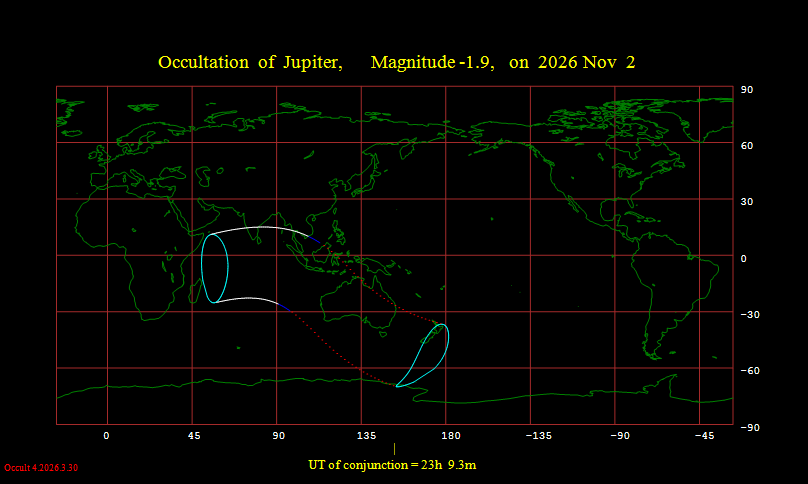
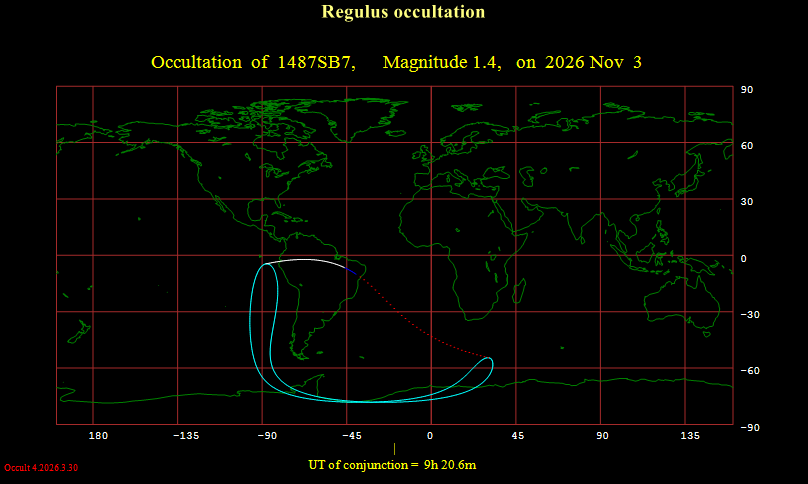
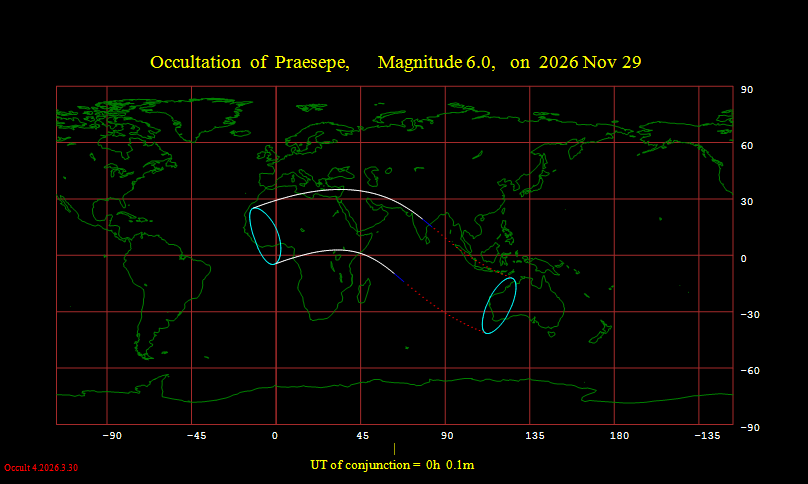
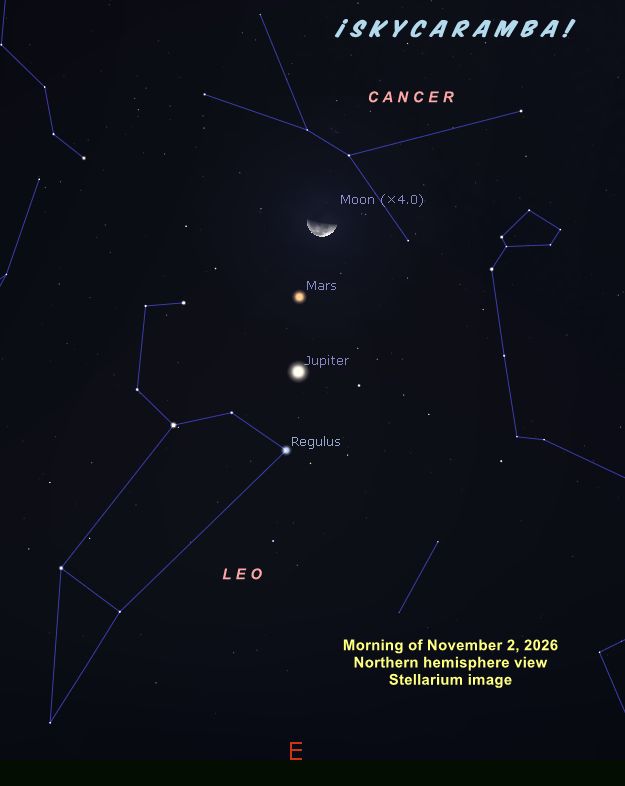
We have a first quarter moon right as November starts. And the moon’s lined up with Mars, Jupiter, and Regulus on the mornings of the 1st and 2nd. They all rise about midnight. The moon passes in front of Jupiter for some observers on the 2nd. The visibility zone is across southern India and Sri Lanka to western Malaysia. On the 3rd, South American observers can see the moon occult Regulus. The line-up remains interesting as the moon passes below these objects on the 4th.
The moon’s mostly out of Leo and on the way into Virgo as it crosses over our equator going southward on the 5th. Then Luna’s on to a special pairing with Venus on the 7th. The planet also appears near Spica, giving this month’s pairing a little extra majesty.
The moon’s sort of close to Mercury on the morning of the 8th. This will be hard for many viewers to see as sunrise isn’t far behind. The best views are from around 16° north. Even from there, the coming sunrise glow is very strong. New moon is on the 9th.
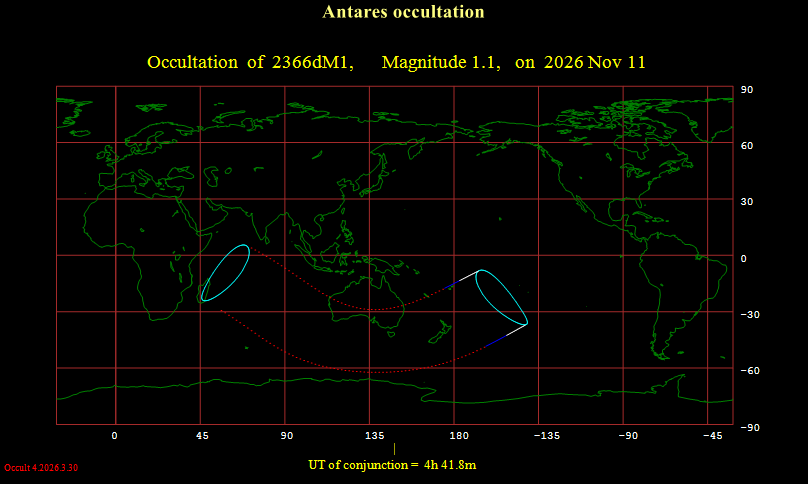
In the evening sky, the moon passes near Antares on the 13th. Southern lunistice happens on the 12th at 27.7° from the equator. Lunar apogee is on the 13th at 405,700 km.
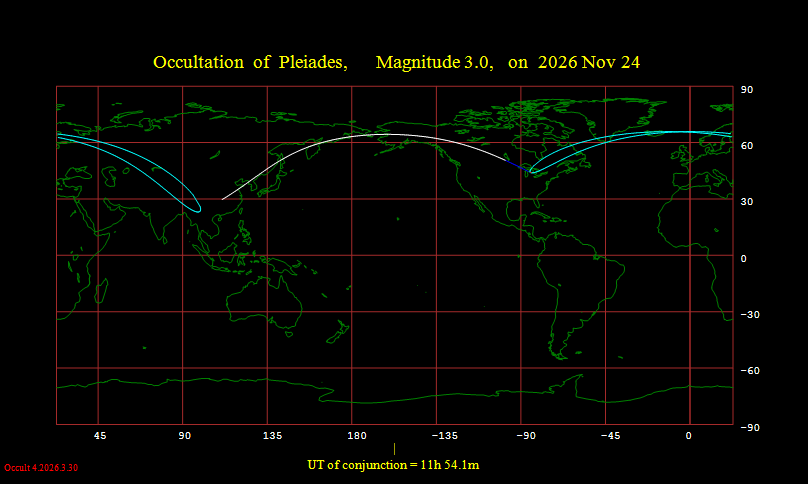
The moon passes near Pluto’s spot in the sky on the 15th. First quarter is on the 17th, the moon goes north over the equator on the 19th, and then the moon passes Neptune and Saturn on the 20th. Many northern hemisphere observers can see the moon occult the Pleiades on the 24th while it’s passing by Uranus.
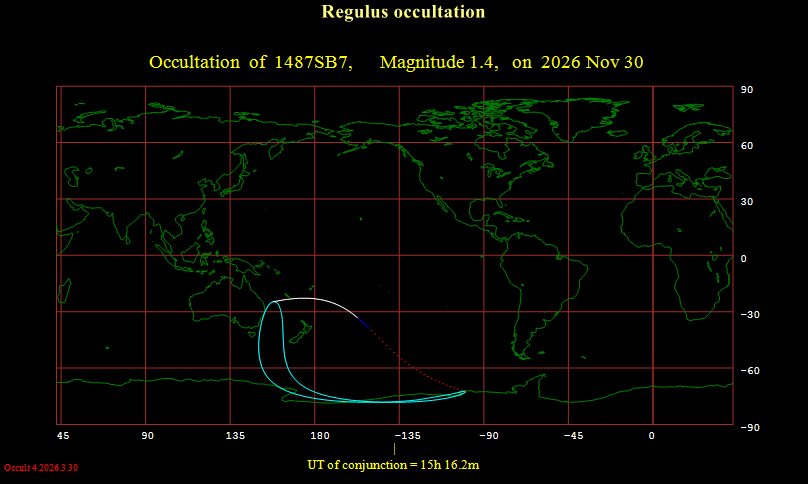
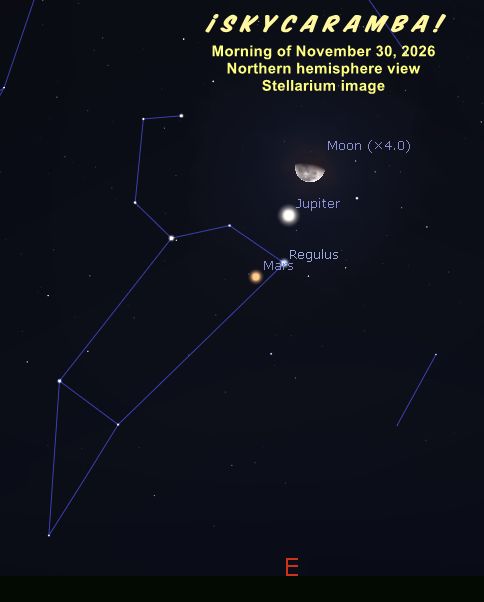
Lunar perigee is on the 25th at 359,300 km. Northern lunistice happens on the 26th at 27.6° from the equator. The moon passes close to Pollŭ on the 28th. And we close the month with Luna passes by Jupiter, Regulus, and Mars again on the 30th. There will be an occultation of Regulus for which New Zealand is well placed.
Planets
If you can watch Venus morning to morning, you’ll see it curving around Spica, coming up from below on the right, passing closest to the star at 1.2° separation on the 9th, and then continuing over and around to the left of the star after that. Venus is moving retrograde until the 11th.
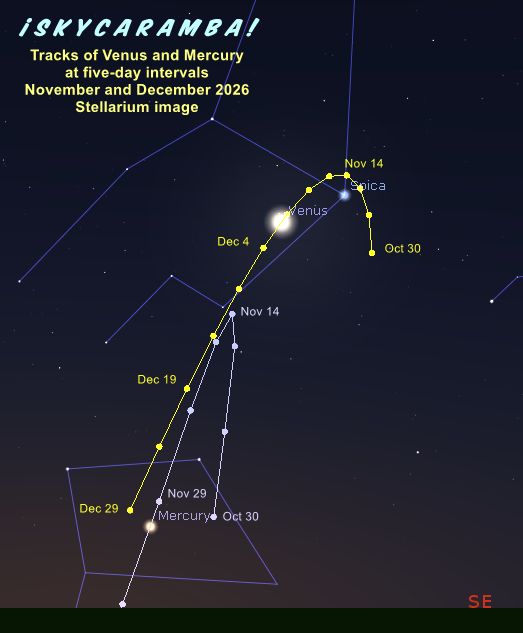
Mercury is at inferior conjunction on the 4th. As it emerges into the morning sky, it behaves sort of like a reflection of Venus, also following a curve to turn around but much faster. Mercury’s change from retrograde to direct motion happens on the 13th, just two days after Venus’s. Mercury doesn’t happen to be curving around a bright star as this happens. It’s on a straighter path as it goes by Zubenelgenubi on the 26th. Mercury is at perihelion on the 10th at 0.31 astronomical units from the sun. The planet’s geometric dichotomy phase is on the 18th. Mercury’s at greatest elongation 19.6° west of the sun, on the 20th.
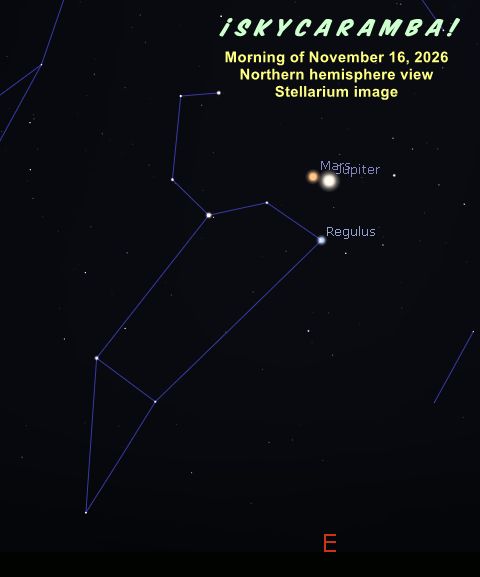
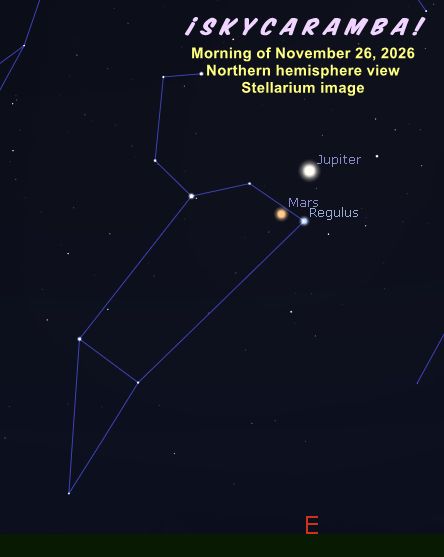
The aforementioned lineup of Regulus, Jupiter, Mars, and the moon greets us in the morning as November begins. And this is just the beginning of an exciting slow action show. The moon passes by quickly. Mars approaches Jupiter. They pass closest at 1.2° apart on the 16th. Mars keeps going, passing 1.7° from it on the 26th. This is the first pass in a triple conjunction of Mars and Regulus. The second pass happens in February and the third in May. The red planet will pass the star now, turn around in a few weeks, pass the star in the other direction, then turn around again for another pass. Meanwhile, Jupiter will appear to approach Regulus, turn around, go the other way for a while, and then turn around again. It will look like Jupiter is turning around and Mars is backtracking to go see what Jupiter’s doing. And then when Jupiter decided to turn around to go the “right way” again, Mars decides everything’s okay and carries on in that direction too. Jupiter will finally pass Regulus next July. By that time, these two planets and the constellation Leo will be evening objects setting shortly after sunset.
You have a chance to see Jupiter for a little bit after sunrise around the 18th. The planet’s a quadrature with the sun. So when the sun is rising, the planet is on the meridian, shining through less atmosphere. With less atmospheric extinction of its light, more of it gets to an observer on Earth’s surface. So for a few seconds or maybe even a few minutes after the sun comes up, you have a chance to see the brighter night objects during daylight. It will help to know exactly where to look. Watch a half hour before sunrise and judge where the planet will be in reference to a treetop or a rooftop when viewed from some spot in your yard. Then keep watch.
Mars reaches quadrature just two days later, but it’s not bright enough for this kind of observation. But feel free to prove everyone wrong. If it’s any consolation, Mars will be at minimum illumination on the 10th. Just 89.4% of the Earth-facing Martian disk will be lit. In a magnified view, one side will look sharp and the other a bit diffuse.
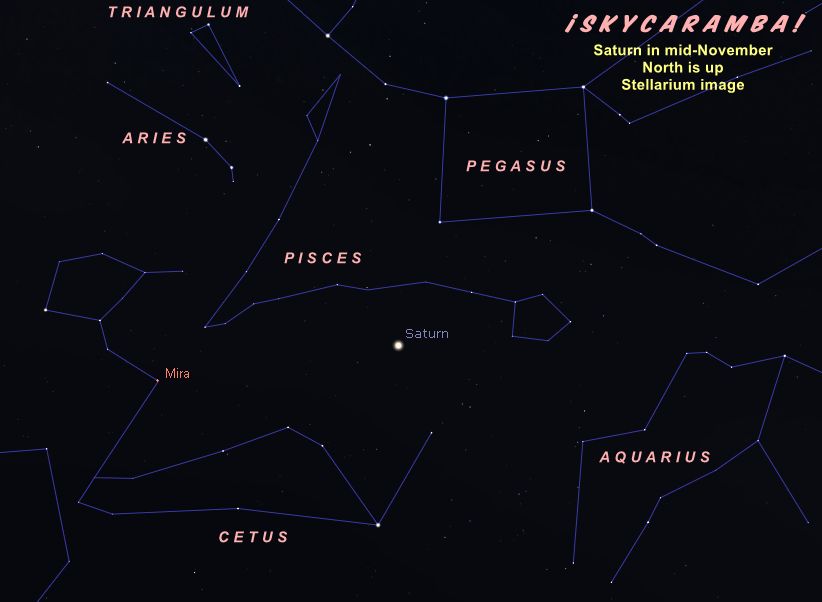
Saturn hangs out near Pisces all month.
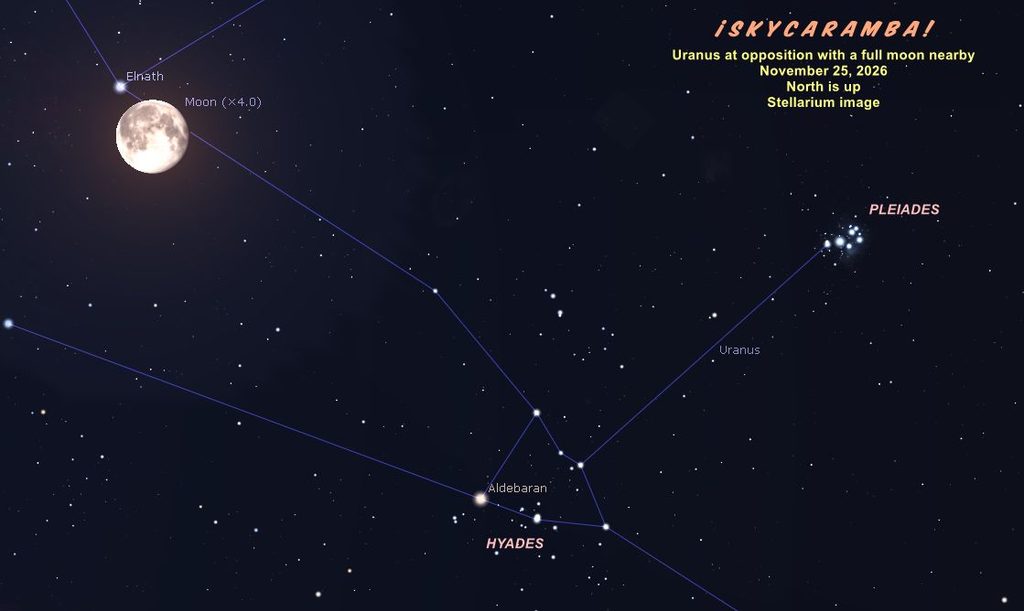
Uranus is at opposition on the 25th, 18.44 au from Earth. The planet appears between the Hyades and the Pleiades, near an asterism dubbed Davis’s Dog. An astronomer named John Davis named it.
Meteor showers
The Leonid meteor shower peaks about the 17th. Since the moon’s at first quarter that week and the shower’s radiant is up after midnight, the moon won’t interfere with the best viewing.
Mira
Mira, the famous long-term variable star in Cetus, will likely reach naked eye brightness this month. The star goes from dimmest to brightest to dimmest again over an 11-month period. It’s expected to be at its brightest again in late January or early February. Mira isn’t far from where Saturn is in the sky.