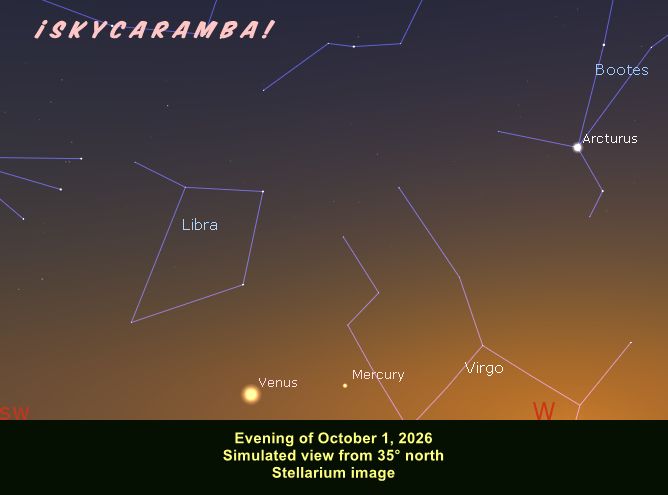
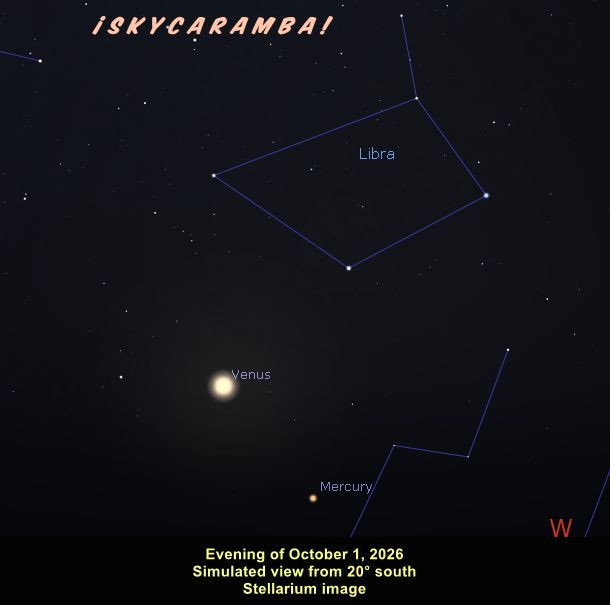
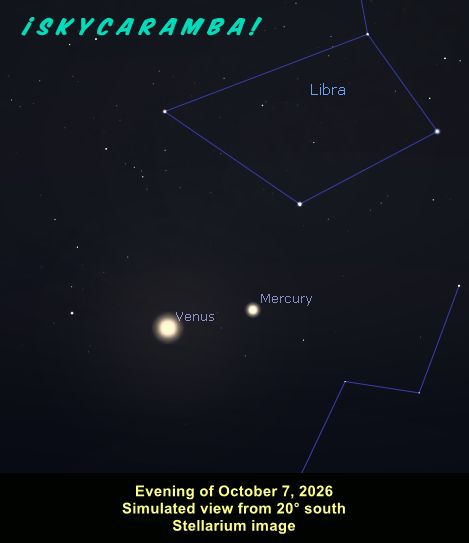
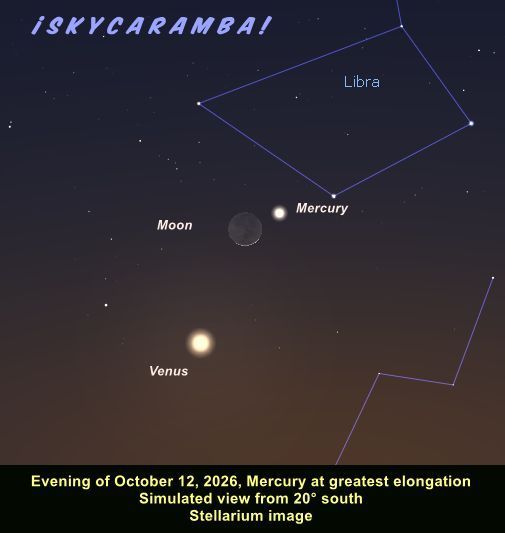
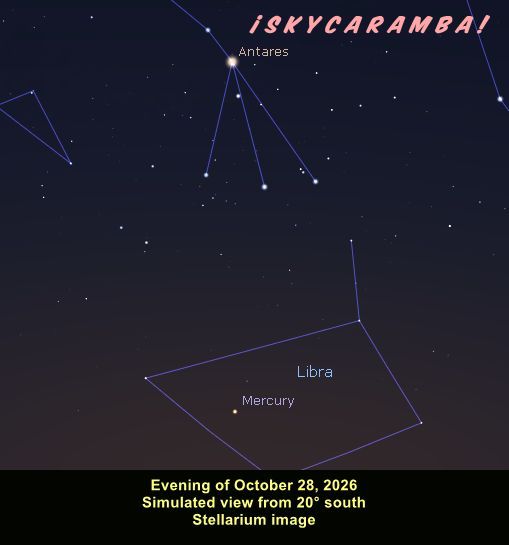
Best seen from the southern hemisphere, Venus and Mercury grace our evening sky at the start of the month. They set not long after the sun. And not long into the month, they’re both difficult to see from the north. Both continue getting harder to see from anywhere as they head toward inferior conjunction. Venus begins retrograde motion on the 2nd. So, if you can see the planet, you can watch it moving westward among the stars. Mercury continues prograde until the 24th. On that day, Venus is at inferior conjunction. But along the way, the messenger planet reaches greatest elongation west of the sun on the 12th at 25.2 degrees. The moon will be near Mercury and Venus on that evening. Mercury reaches inferior conjunction on the 4th of November.
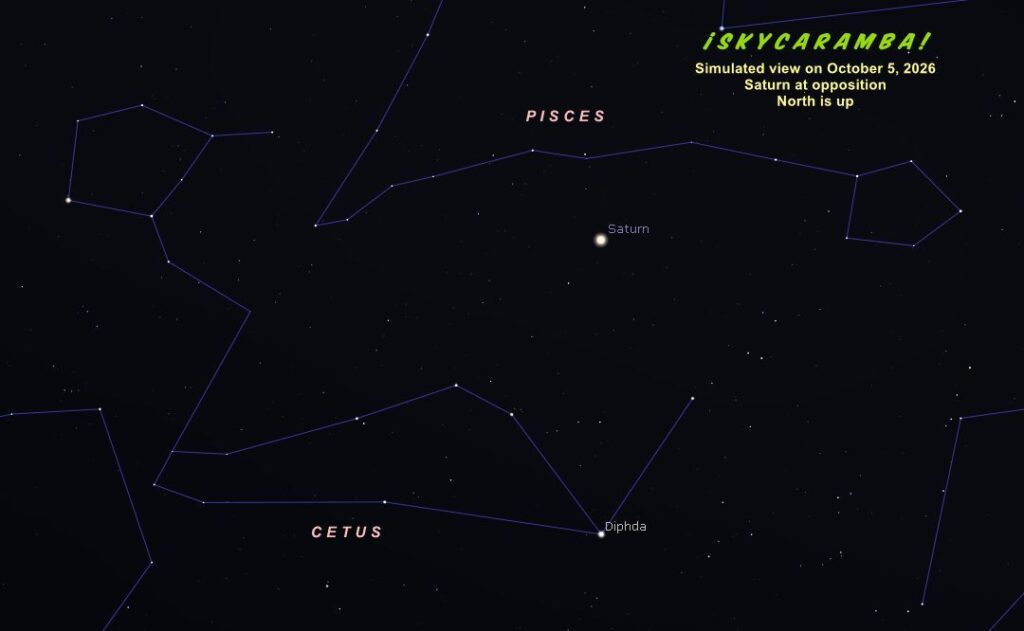
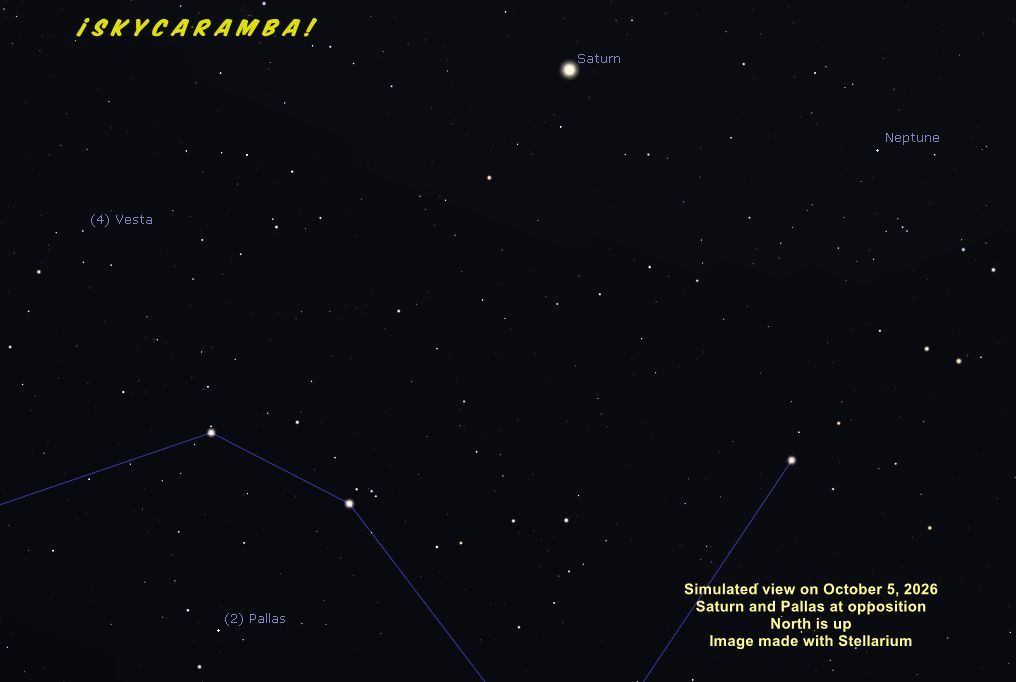
Saturn rises at dusk. It’s at opposition on the 4th. It will be 8.434 astronomical units from the earth on that date. Neptune remains somewhat close to it alongside Pisces. The asteroid Pallas is at opposition on the same date, 1.854 au from Earth. Pallas appears in Cetus. Binoculars or a telescope bring Pallas into view. Vesta is also seen with magnification. It’s also in Cetus and reaches opposition on the 13th at 1.483 au from us.
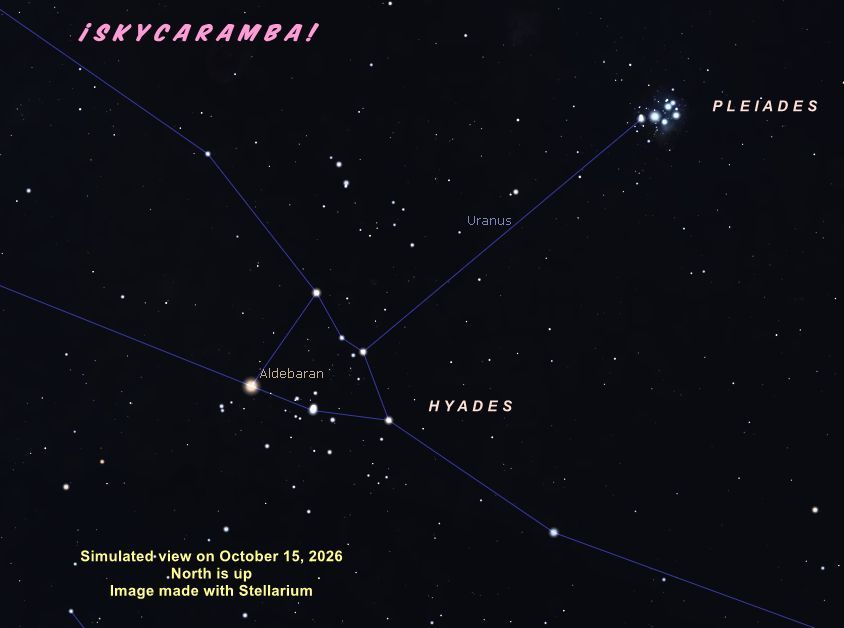
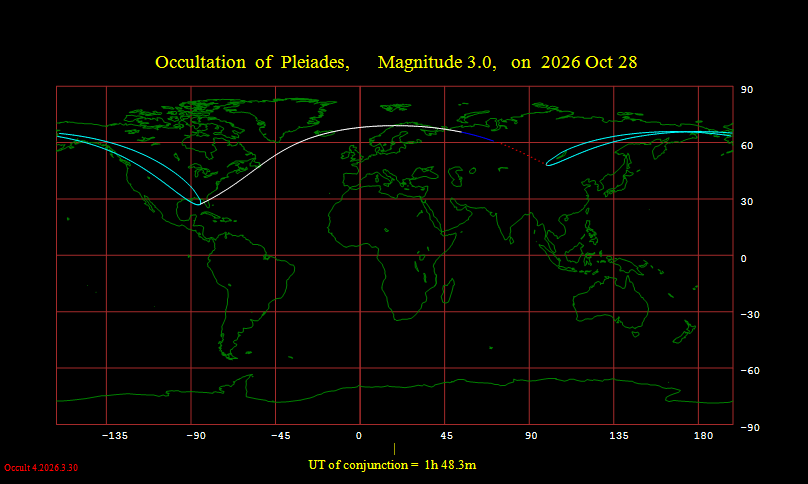
Mid-evening, between the Hyades and the Pleiades, Uranus rises. The planet has been pretty much parked there for a while.
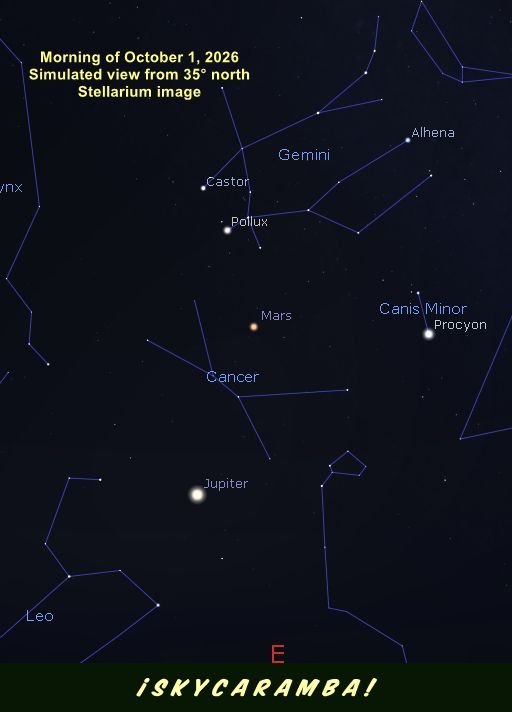
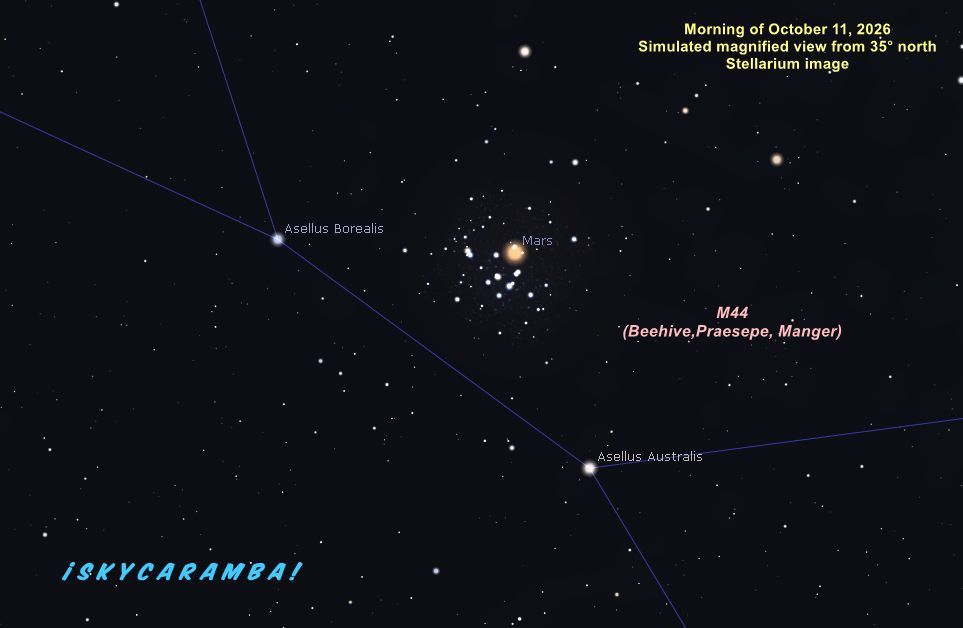
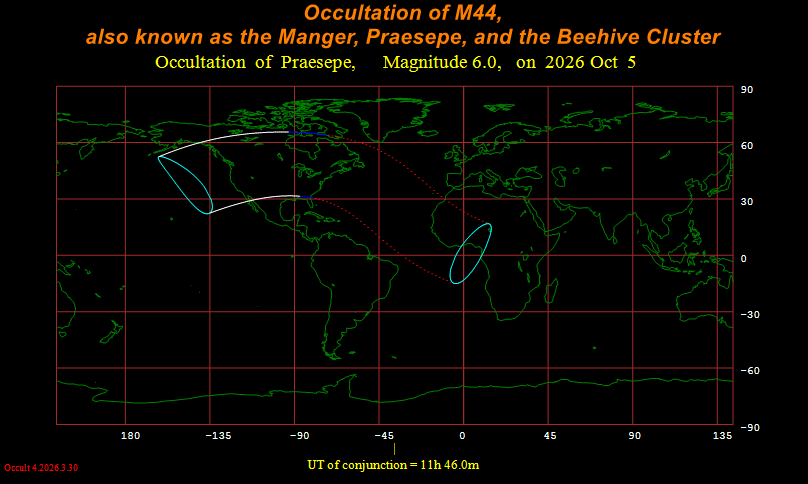
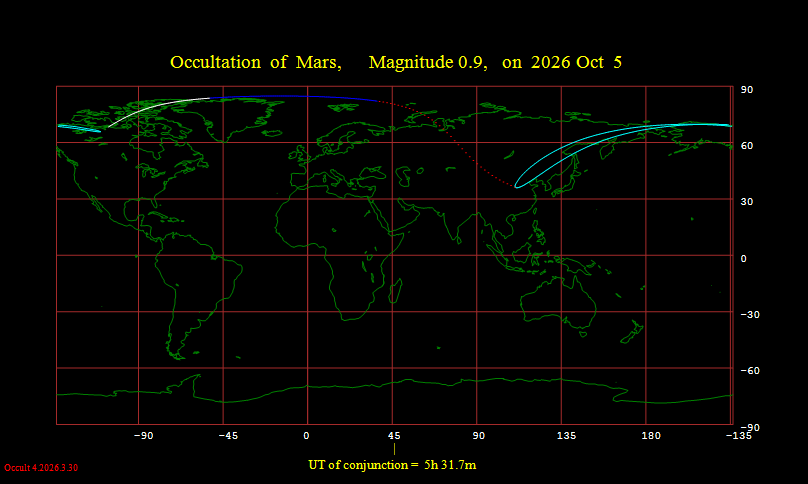
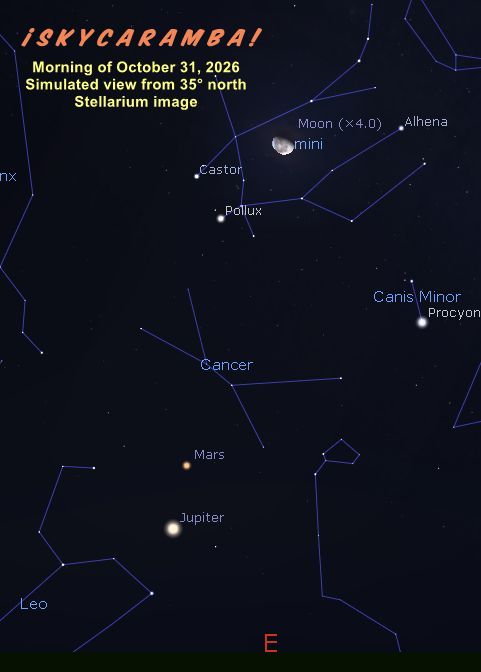
Mars and Jupiter rise around midnight, straddling Cancer as October starts. Mars is west of the crab and Jupiter east of it. Both are moving eastward. The moon passes by Mars on the 5th and Jupiter the next morning. Around the 10th through 13th, see Mars pass through Praesepe, also known as M44 and the Beehive. Mars is clearly moving faster than Jupiter, but it won’t catch up with it until next month. Watching these two planets will be interesting during the next seven months or so. Mars will pass Jupiter and then Regulus. Jupiter will slow down on approach to Regulus, pause, and turn around. Then, Mars at the belly of Leo, will pause and turn around as though to go back and figure out what Jupiter’s up to. Mars will almost catch up to Jupiter between Leo and Cancer and then turn around for eastward (prograde) motion again. And then, Jupiter will turn around for prograde motion also. Mars and Jupiter will rise earlier as the weeks and months go by. They’ll be high in the sky next May.
Moon circumstances
Northern lunistice at 28.0 degrees from the equator is on the 2nd. The moon goes south of the equator on the 8th. Southern lunistice occurs on the 16th at 27.9 degrees south. The northward return over the equator happens on the 23rd. A second northern lunistice happens on the 29th at 27.8 degrees.
Lunar perigee is on the 1st at 369,400 km from Earth. Apogee is on the 16th at 404,700 km. A second perigee is on the 28th at 364,400 km.
Last quarter phase is on the 3rd. New moon happens on the 10th. First quarter is on the 18th. Full moon is on the 26th.
Notable conjunctions
Moon 3.7 degrees from Pollux on the 4th.
Moon 1.1 degrees from Mars on the 5th.
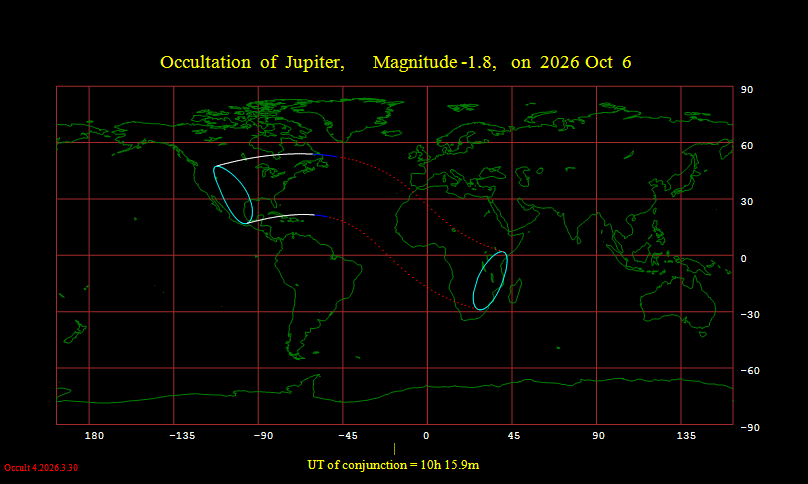
Moon 0.2 degrees from Jupiter on the 6th. Occultation.
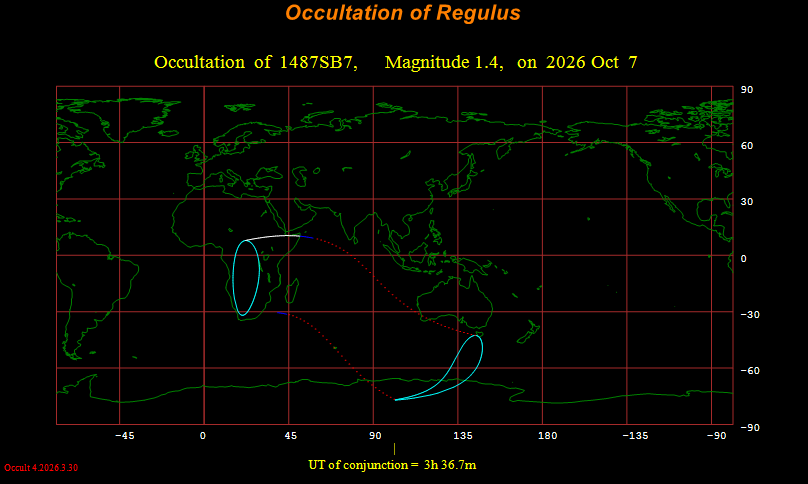
Moon 0.6 degrees from Regulus on the 7th.
Mercury and Venus 5.0 degrees apart on the 7th.
Moon 2.1 degrees from Spica on the 11th.
Moon 2.8 degrees from Venus on the 12th and then 2.0 degrees from Mercury.
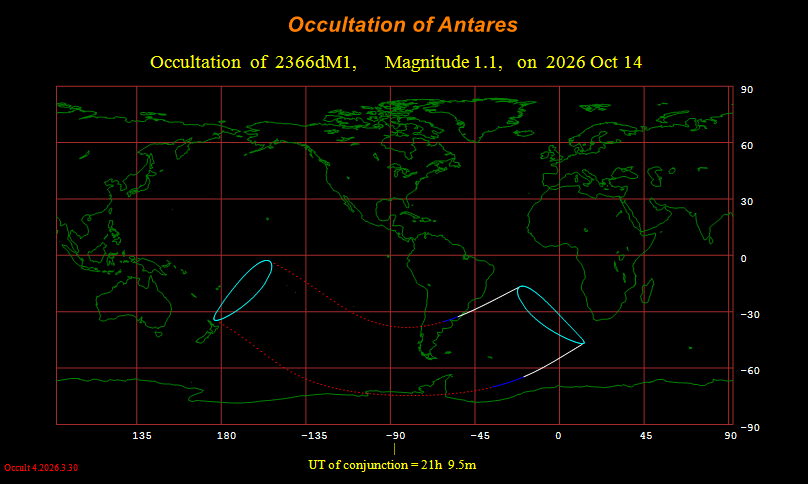
Moon 0.4 degrees from Antares on the 14th. Occultation.
Moon 2.1 degrees from Pluto on the 19th.
Moon 4.3 degrees from Neptune on the 23rd.
Moon 6.0 degrees from Saturn on the 24th.
Venus at inferior conjunction 6.5 degrees from the sun on the 24th.
Moon 5.1 degrees from Uranus on the 28th.
Moon 3.9 degrees from Pollux on the 31st.
Meteor showers
The Southern Taurids peak about October 14th. The peak produces five to ten meteors per hour. With this happening close to new moon, skies will be dark for it. Comet 2P/Encke leaves behind the dust for this shower.
The Orionid meteor shower could produce meteors on almost any night this month, but the peak is on the 21st to 22nd. The moon is close to full, so that will spoil the view. On average, this shower produces ten to 20 per hour, but it has been observed at up to about 75 at times. This shower comes from dust left behind by Comet 1P/Halley. It’s one of two meteor showers associated with the famous comet.
Noteworth occultations