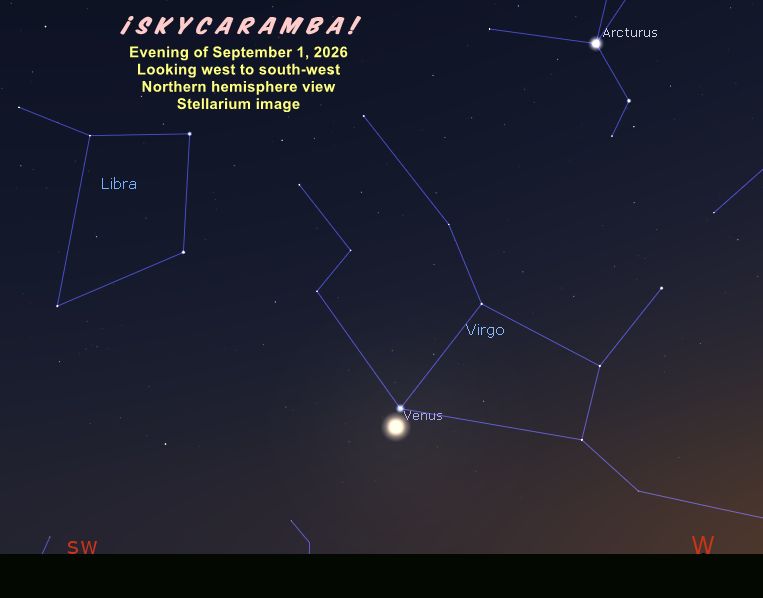
Look west at dusk on the first night of this month and you’ll see Venus next to Spica. Lately, the light from Venus takes 4 minutes, 40 seconds to reach us. The light from Spica takes 250 years!
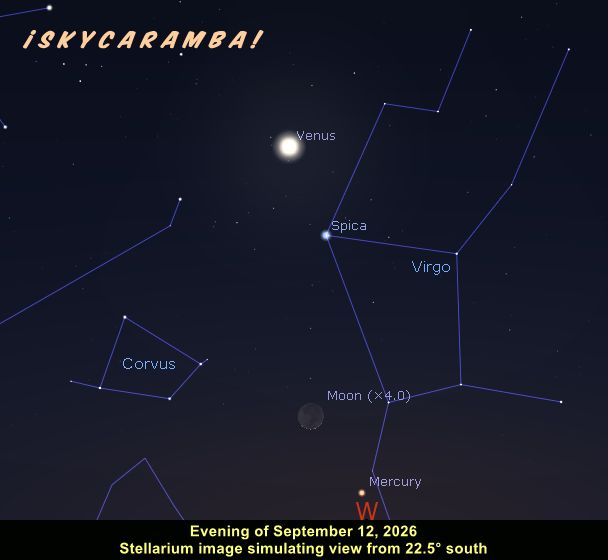
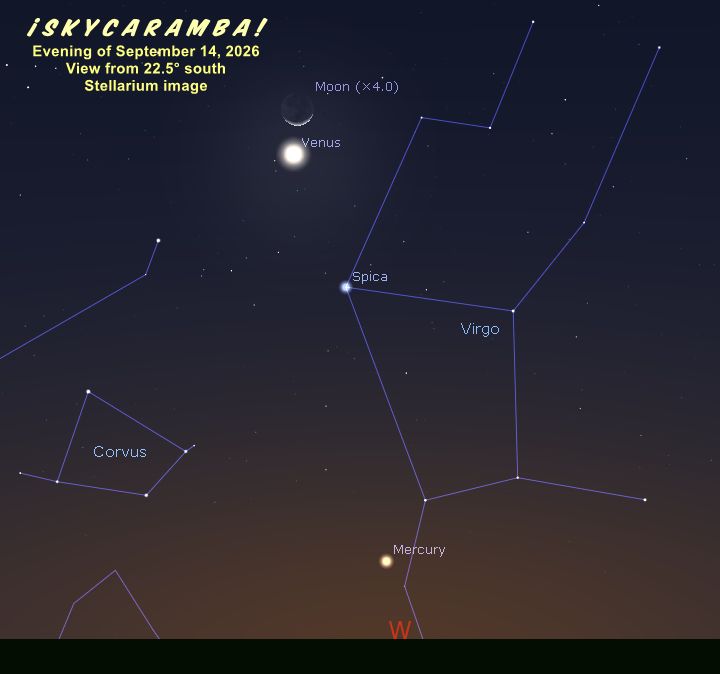
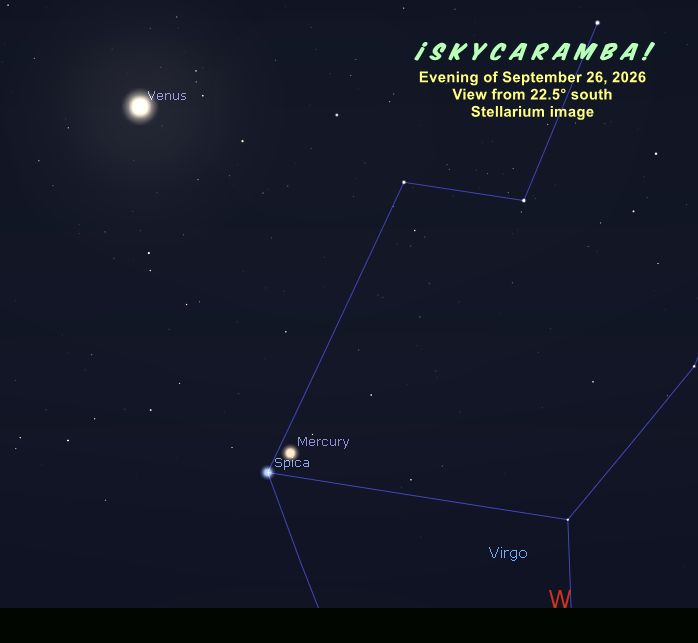
Southern hemisphere observers will see this first. Mercury is attempting to join Venus in the evening sky. The messenger planet moves alongside Virgo this month, getting a visit from a young, crescent moon on the 12th. Then, Mercury passes Zaniah on the 13th. The moon’s close to Spica that night and then Venus on the 14th. Mercury’s close to Spica on the 25th and 26th. By that time, northern hemisphere observers have the best chance of seeing the planet, although it’s still not great. A cluttered horizon or clouds will interfere. The month ends with Mercury almost catching up to Venus, which is slowing down to turn around for retrograde motion in October.
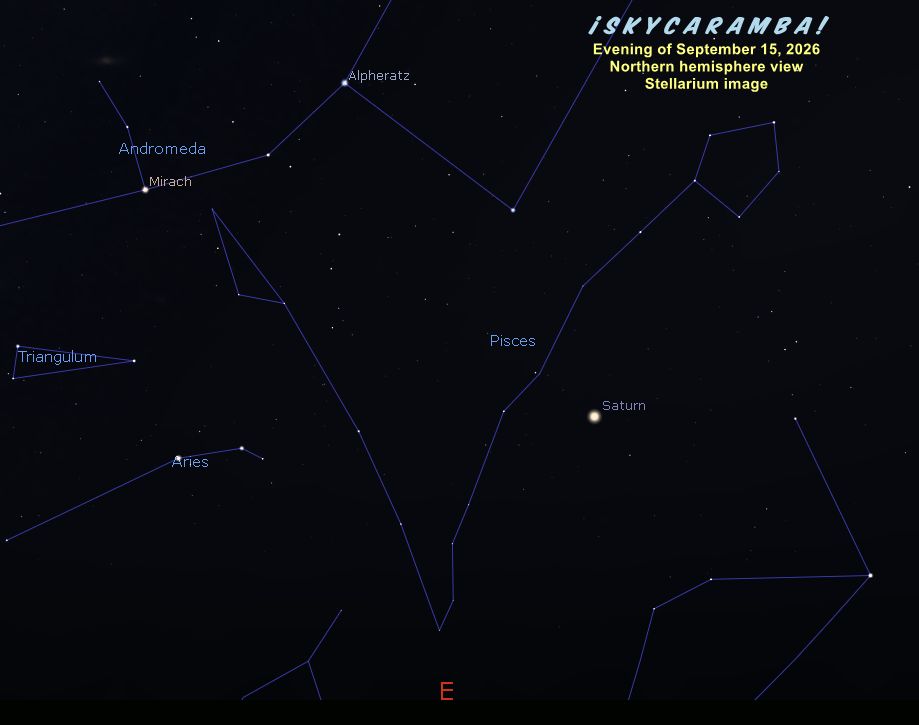
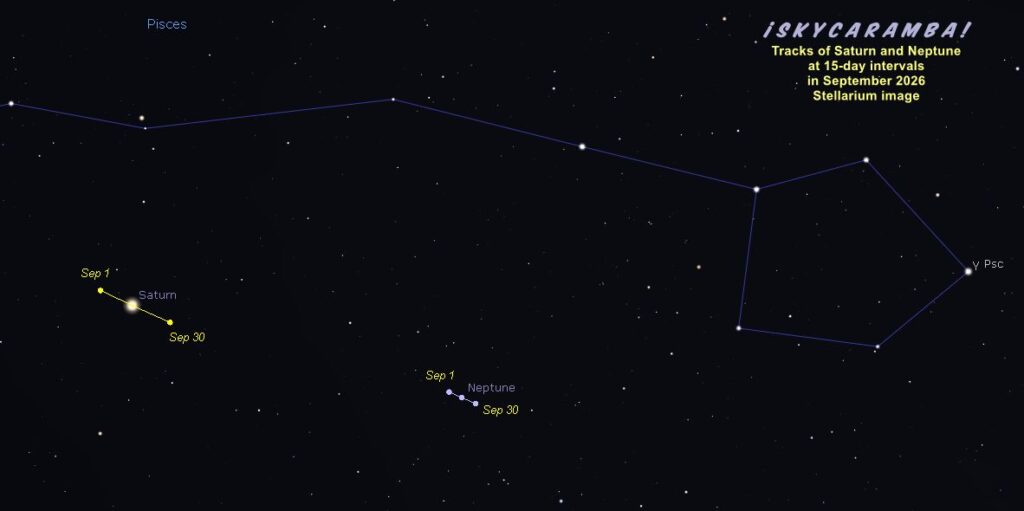
Saturn rises mid-evening next to Pisces. The Great Square of Pegasus is easy to see above them. Neptune requires binoculars or a telescope to be seen, but its not far from Saturn in the sky. A waning, gibbous moon is on the other side of Pisces on the first evening of the month.
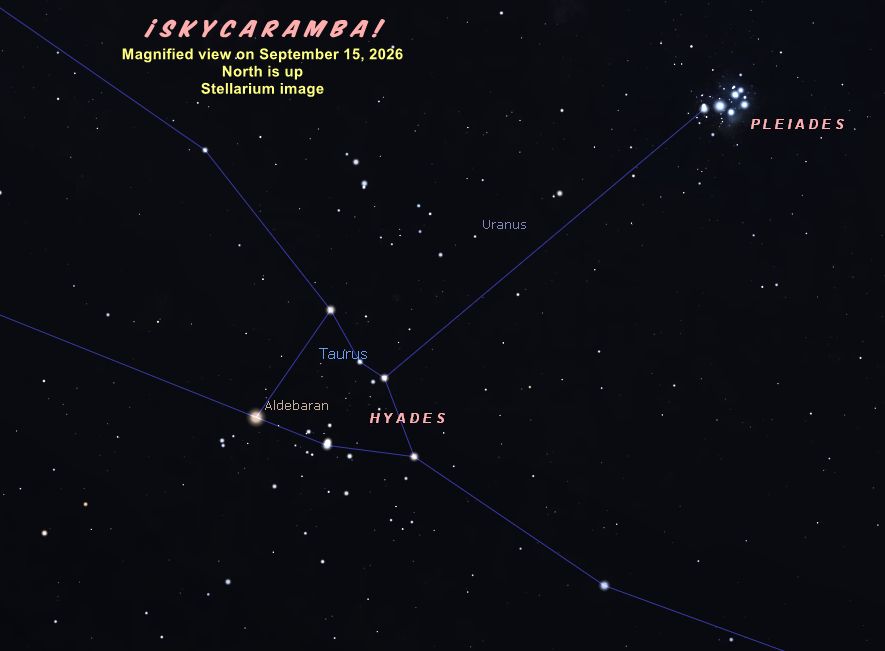
Uranus is a late evening riser. It’s between the Hyades V and the Pleiades kite. The moon’s close by on the night of the 3rd to 4th. The moon reaches last quarter phase on the 4th.
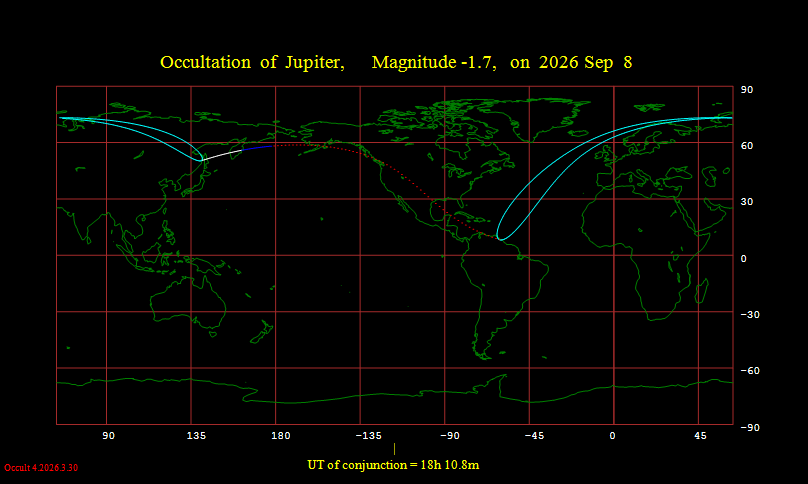
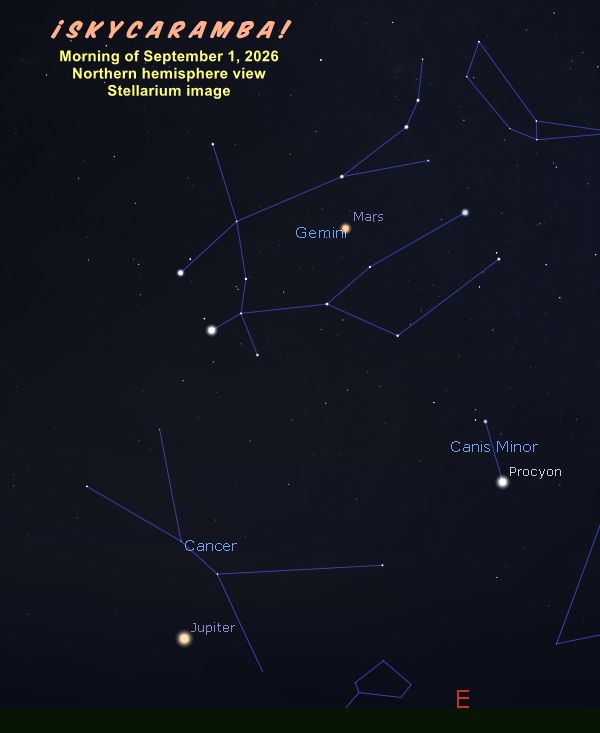
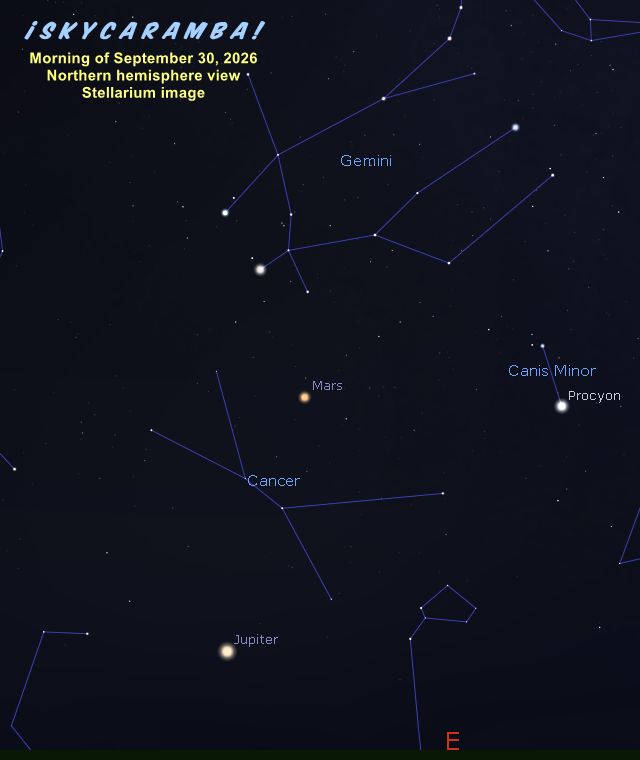
Gemini rises mid-morning. As the month starts, that’s where you find Mars. It’s in the middle of Gemini, moving toward Wasat on the Pollux side. Jupiter rises later, below Cancer. A waning, crescent moon passes by Mars on the 7th and Jupiter on the 8th. The red planet passes by Wasat on the 10th. Then it continues its way out of Gemini. Meanwhile, Jupiter is going in the same direction out of Cancer. Around the 25th, the two planets are straddling the crab. By the end of September, Mars is moving on toward Cancer. Keep watching and you’ll see Mars in the Beehive Cluster in Cancer’s heart next month.
Watch every morning and see Leo the lion rising a little earlier. By the end of the month, he’s easy to see in his entirety before the coming sunrise light is too bright.
Moon circumstances
Last quarter is on the 4th, new moon on the 11th, first quarter on the 18th, and full moon on the 26th.
The moon’s at northern lunistice on the 5th at 28.1° from the equator. It goes south of the equator on the 11th. Southern lunistice is on the 18th at 28.1°. The moon goes north across the equator on the 26th.
Lunar perigee happens on the 6th at 368,200 kilometers. Apogee is on the 19th at 404,200 km. The next perigee is on October 1 at 369,400 km.
Planet circumstances
Venus is at aphelion on the 4th at 0.73 astronomical units from the sun.
The asteroid Eunomia is at aphelion on the 5th at 3.14 au from the sun.
Neptune begins retrograde motion on the 10th. The planet is closest to Earth on the 25th and at opposition on the 26th, 28.876 au from Earth.
Mercury is at aphelion on the 27th at 0.467 au from the sun.
Two equinoxes
Earth’s equinox occurs at 00:06 UT on the 23rd. The sun appears over the equator moving southward day to day. Mars has its opposite equinox one week later on the 30th at 08:29.
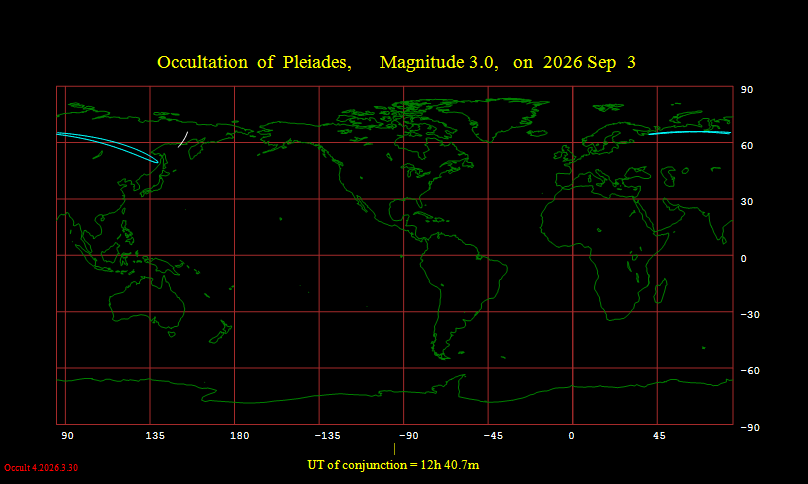
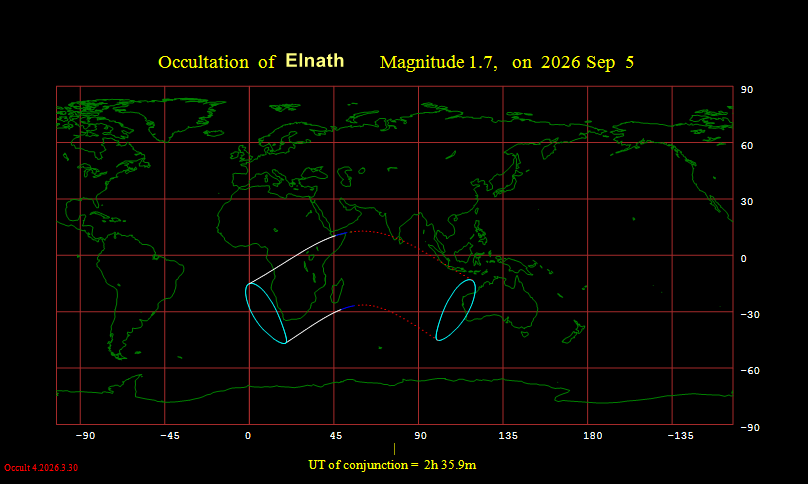
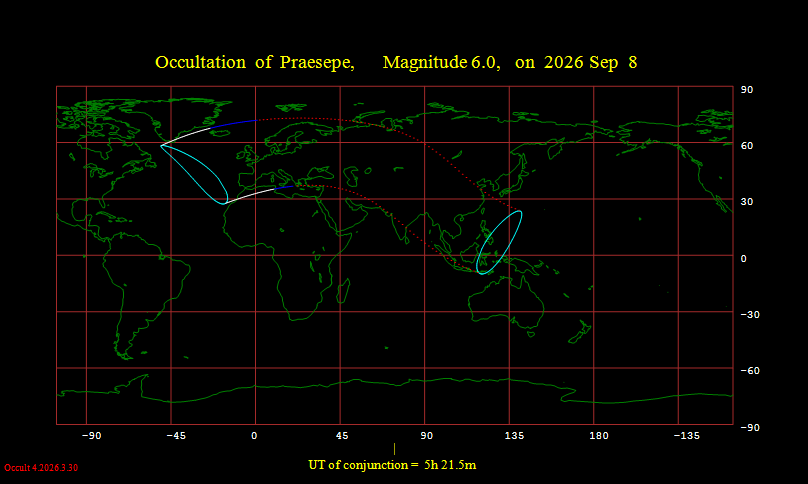
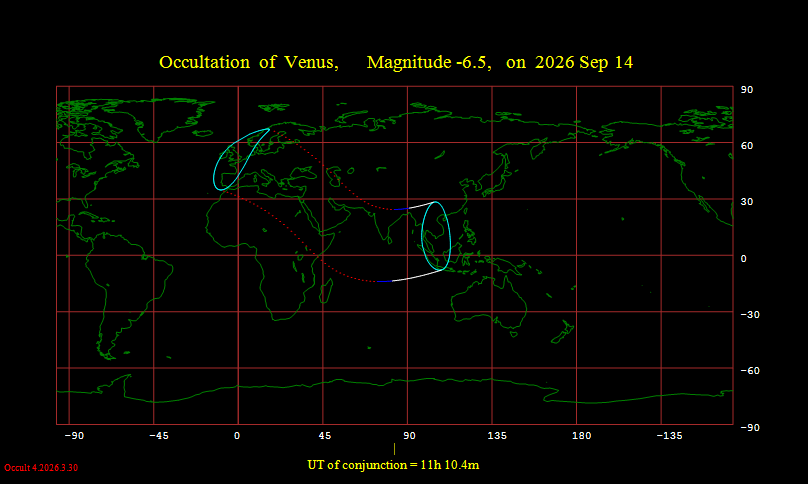
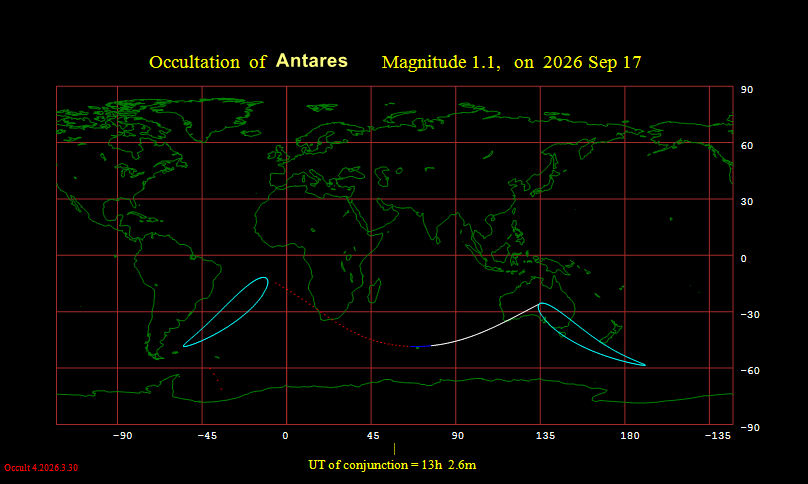
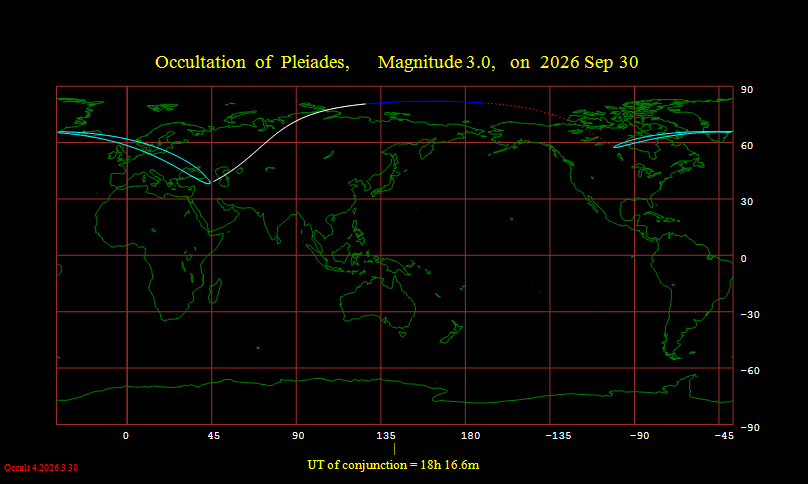
Visibility maps for notable lunar occultations this month