Solstice
The June solstice happens at 08:25 UT on the 21st. So the nights are shortest this month for northern hemisphere observers and longest for those south of the equator.
Evening sky
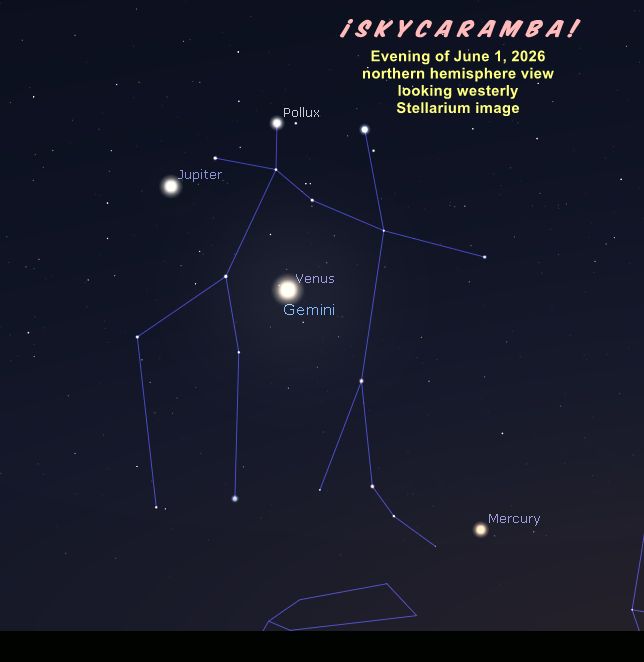
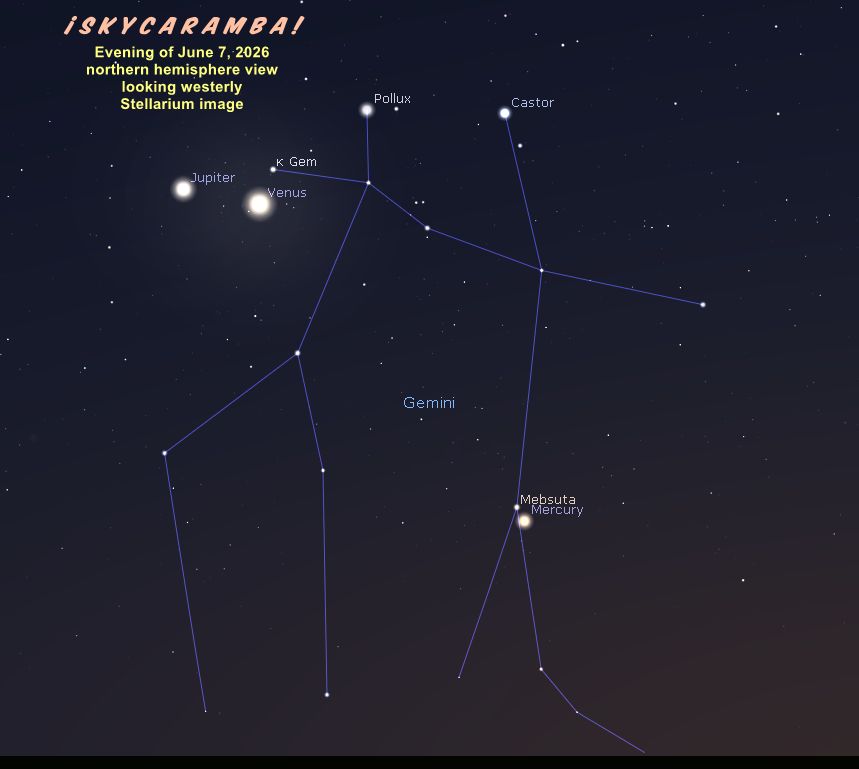
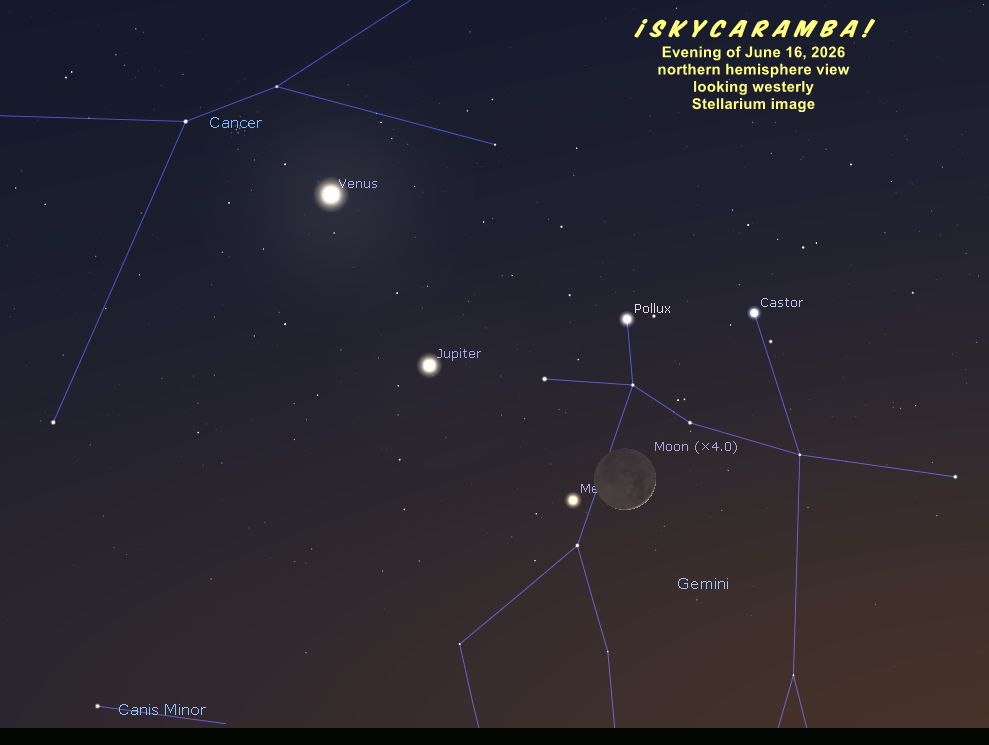
Three naked eye planets are lined up in the evening sky. All three spend the first ten days of the month within the International Astronomical Union’s boundaries for Gemini. Venus starts the month in the middle of the constellation when Gemini is flanked by Jupiter on its east side and Mercury on the west. See them as darkness sets in. On the 7th, Mercury is zipping by Mebsuta on the Castor side of the twins while Venus has nearly caught up to Jupiter. By the 10th, Venus is clearly past slowly moving Jupiter and Mercury is in the middle of the constellation. On the 11th, Venus has passed into the boundaries of Cancer. Mercury’s greatest elongation of 24.5° east of the sun happens on the 15th. Then a young, crescent moon passes by Mercury on the night of the 16th. Of course, it passes Jupiter on the way to passing Venus on the evening of the 17th. Whether you get to see the moon close to Jupiter depends on where you are in the world. Australia and eastern Asia get the view, although they don’t get the view of the moon as close to Mercury one night and Venus the next.
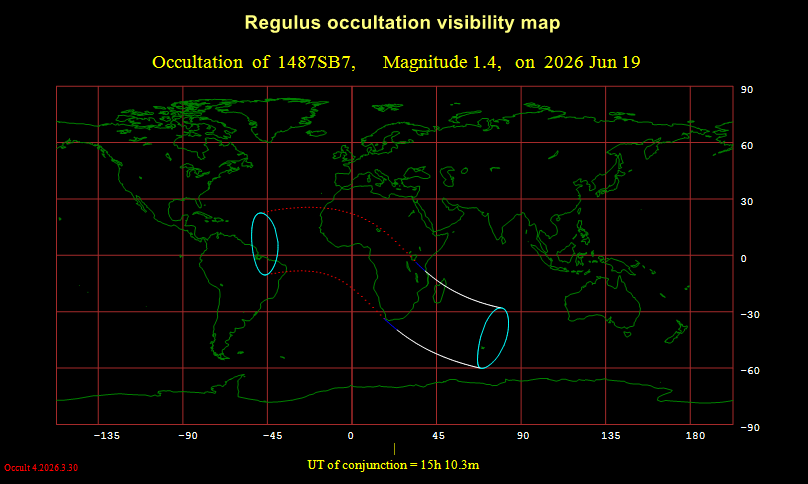
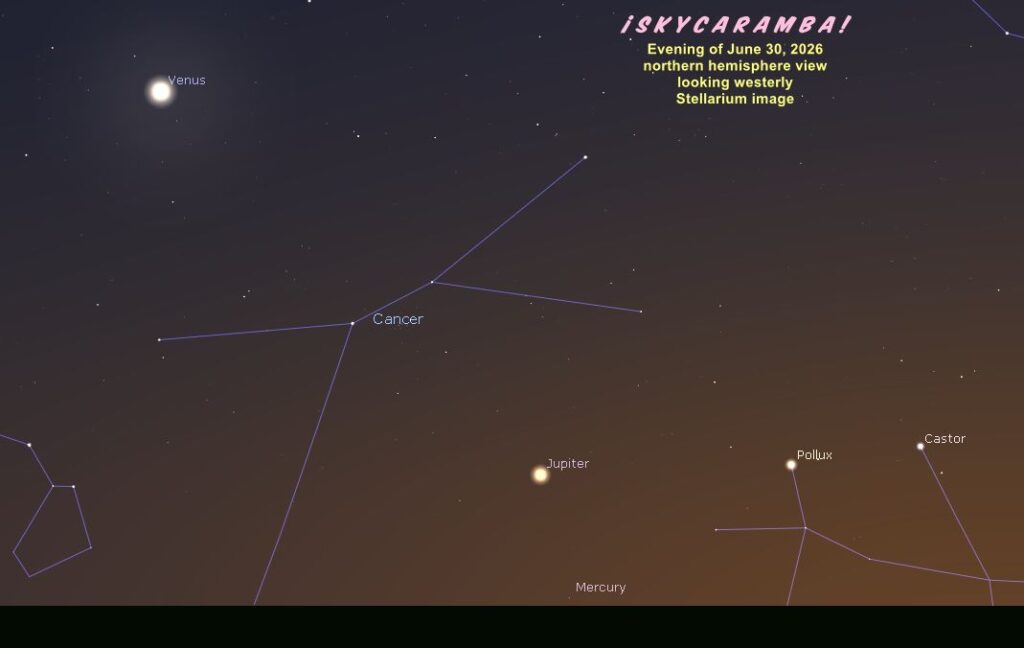
The moon moves on past Regulus on the evening of the 19th when Venus is going into M44, also known as the Beehive Cluster and the Manger. Madagascar and ocean areas near it get an occultation of Regulus. See the visibility map below. The moon passes Spica in Virgo on the 23rd. That’s about when you should see Mercury isn’t moving as quickly toward Jupiter as it was. In the next few nights, the messenger planet will turn around and begin retreating sunward. By the end of the month, Mercury will be very hard to see because of it heading so far into the sunset glow. And at that time, Cancer will be flanked by Venus on its eastern side and Jupiter to the west. Venus will actually be within Leo’s boundaries at month’s end.
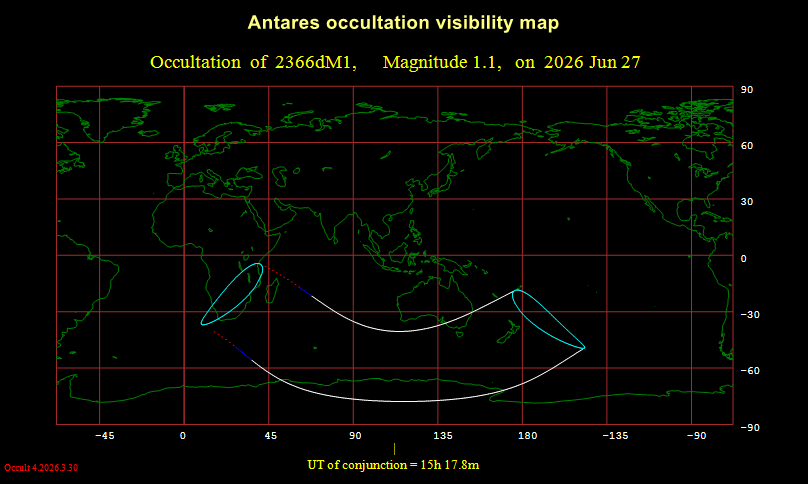
The moon passes by Antares on the 27th. Some observers get an occultation. Southeast Australia and New Zealand are among the places in the visibility area. A big ocean area from the southern Indian Ocean to Antarctica is too. See the visibility map below.
Midnight to dawn
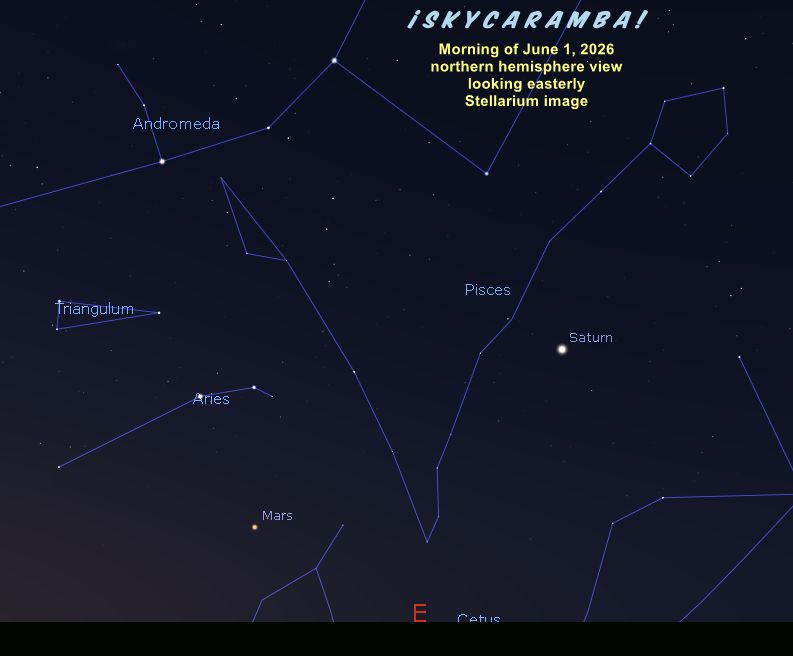
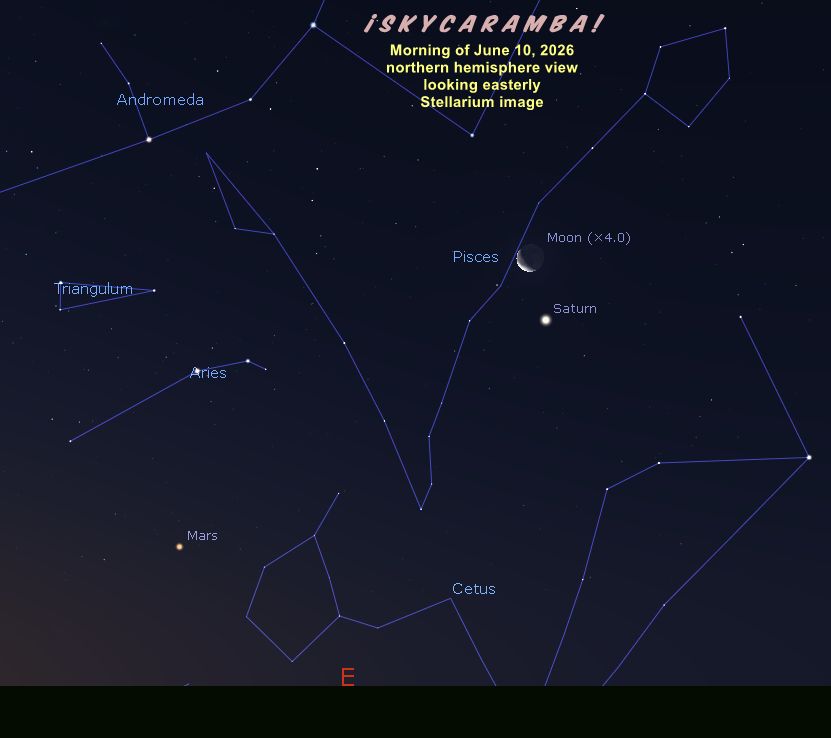
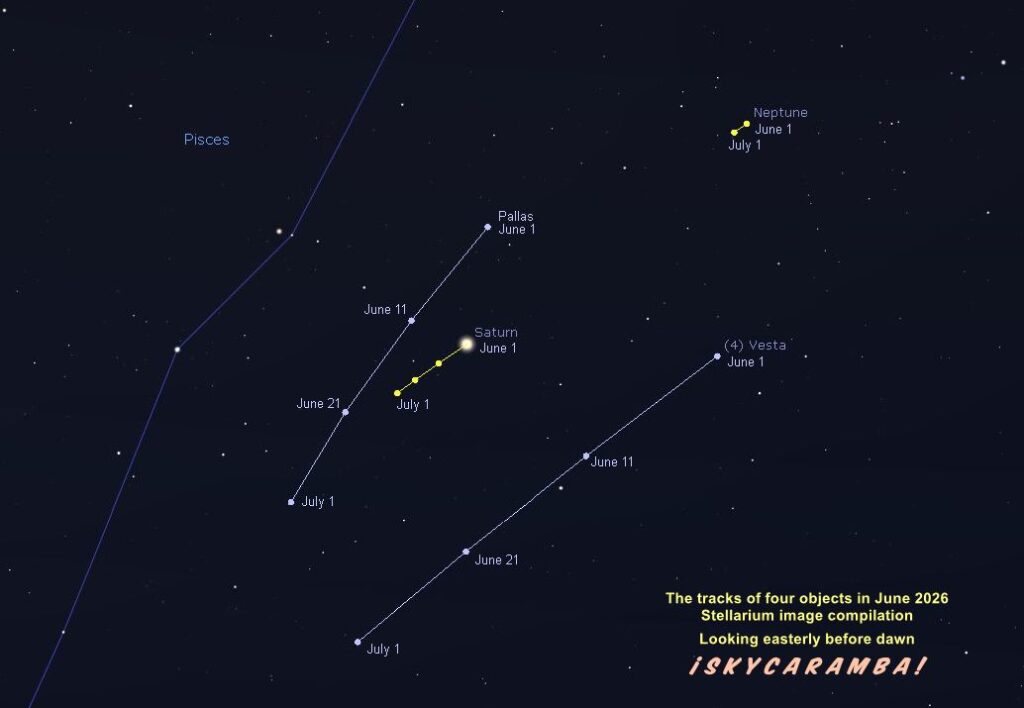
Neptune and Saturn rise in the wee hours alongside Pisces. The ringed planet is actually in Cetus at the month’s start, very close to the line with Pisces. It enters Pisces on the 4th. A waning crescent moon passes by them on the 10th. Neptune will be at quadrature late this month, meaning it’s 90° from the sun. That gives the best chance of seeing the planet looking slightly gibbous in a highly magnified view. Saturn will be at quadrature next month. You can watch the shadow on the rings extending farther from the gas ball this month. If your telescope lets you see any of the ringed planet’s moons, those that go into the shadow will stay hidden longer.
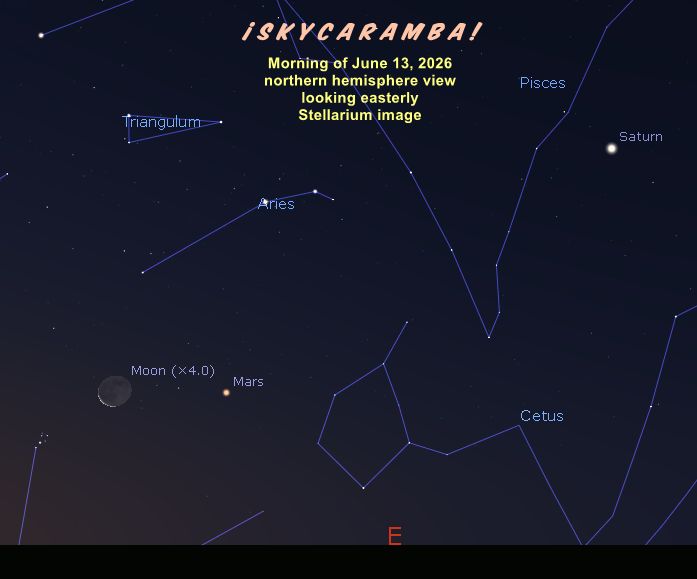
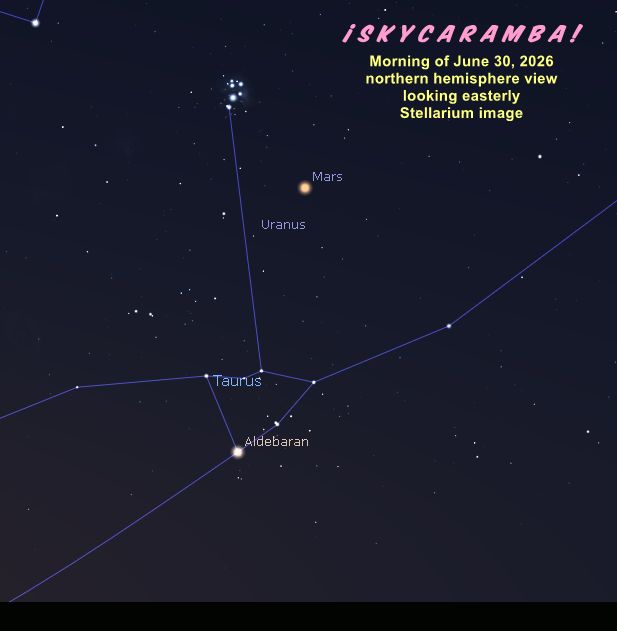
In the dawn, Mars is moving eastward above the head of Cetus the sea monster. A thin crescent moon passes by on the 13th. Toward the end of June, the red planet is in Aries, riding the planetary pathway that will take it between the Pleiades kite of Y and the Hyades V. Uranus is already there, nearly parked, waiting for a rendezvous with Mars on July 4.
Lunar circumstances
The moon is at apogee twice this month. On the 1st and 28th, it will reach 406,300 km away. The second closest perigee of the year is on the 14th at 357,200 km.
The moon’s at lunistice, 28° south on the 1st. It goes north over the equator on the 9th. The next lunistice is on the 15th at 28° north. The moon goes south of the equator again on the 21st. A second southern lunistice of 28° happens on the 28th.
Just past full as June begins, the moon is at last quarter on the 8th, new on the 15th, first quarter on the 21st, and full on the 29th.
Appulses
Notable appulses this month:
3rd – Ceres and Uranus 2.8° apart; a good test for those who like to find dim objects
7th – Venus 4.7° from Pollux as the planet heads out of Gemini
9th – Jupiter and Venus 1.6° apart
10th – Saturn 5.5° from the moon
12th – asteroid Pallas 0.9° from Saturn; the moon 5.4° from Mars
15th – asteroid Vesta 3.9° from Saturn
16th – the moon 2.5° from Mercury
17th – the moon 3.5° from Pollux, later 2.4° from Jupiter, and then 0.3° from Jupiter; the moon occults Jupiter but it is mostly a daytime conjunction
19th – the moon 0.3° from Regulus and it occults the star
23rd – the moon 2.0° from Spica
25th – Mercury and Jupiter 3.7° apart
27th – the moon 0.4° from Antares and it occults the star